Walk-In Cooler Not Cold Enough? Causes & Fixes | Capital Region, NY | Custom Seals HVAC/R
Why Your Walk-In Cooler Isn't Holding Temperature (and How to Fix It)
For any restaurant, market, or shop, a walk-in cooler that won't hold temperature is more than an inconvenience, it's lost product, food-safety risk, and climbing energy bills all at once. The frustrating part is that a walk-in rarely fails all at once. It usually drifts warm gradually, and by the time you notice, you may already be losing inventory. Here are the most common reasons a walk-in cooler stops holding temperature, and what to do about each one.
First, Rule Out the Easy Stuff
Before assuming the worst, check a few basics. Is the door closing and sealing completely? Are boxes or product blocking the airflow around the evaporator fans? Is anything propping the door open, even slightly? Did someone recently load in a large amount of warm product? These simple issues cause a surprising number of "my cooler isn't cold" calls, and they're worth ruling out first. If the basics check out and the box still won't hold temp, it's time to look deeper.
1. Worn or Damaged Door Gaskets
The rubber gaskets around your walk-in door are the seal that keeps cold air in and warm air out. Over time they crack, tear, or flatten, and once that seal fails, cold air leaks out continuously. Your system runs longer and longer trying to keep up, your energy bills rise, and the box still struggles to hold temperature. Gasket replacement is one of the most common and cost-effective commercial refrigeration fixes, and it pays for itself in energy savings.
2. Dirty Condenser Coils
The condenser coil releases the heat your system pulls out of the box. In a busy kitchen or stockroom, these coils get coated with grease, dust, and debris fast. When they're dirty, the system can't shed heat efficiently, so it works harder, runs hotter, and struggles to keep the box cold, all while using more energy and wearing out faster. Regular coil cleaning is one of the most important pieces of commercial refrigeration maintenance.
3. Low Refrigerant or a Leak
Your refrigeration system relies on a precise refrigerant charge to move heat out of the box. If there's a leak, the charge drops, and the system loses its ability to cool properly, often showing up as a box that can't get down to temperature or ice forming in the wrong places. Refrigerant work requires an EPA-certified technician, both for proper repair and because handling refrigerant is federally regulated. This isn't a DIY fix.
4. Iced-Up or Dirty Evaporator Coils
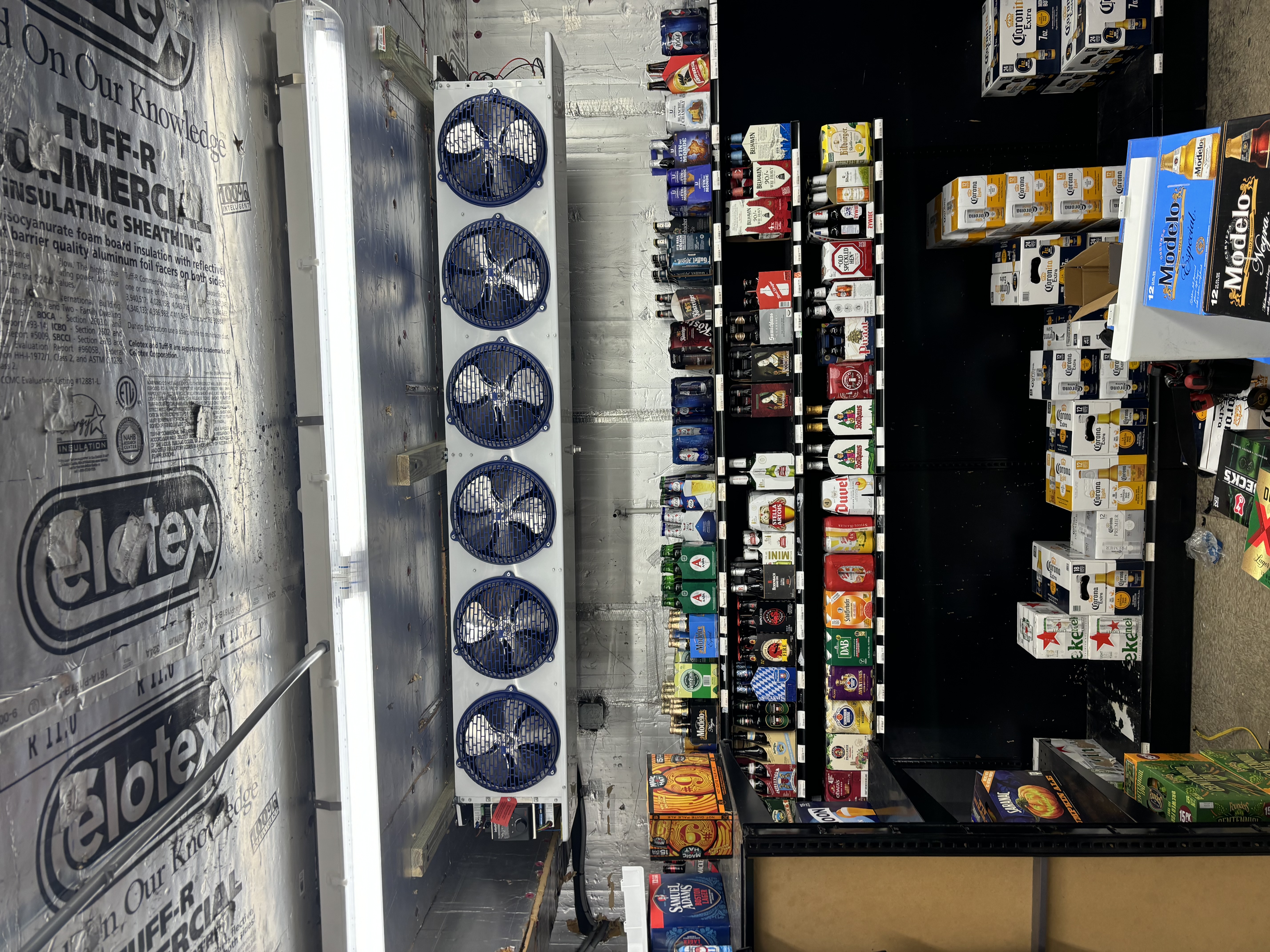
The evaporator, the unit with the fans inside the box, is where the cooling happens. If it ices over or gets clogged with debris, airflow drops and the box warms up. Excess ice often points to another problem, like a failing defrost cycle, a bad fan, or airflow issues, so if you're seeing heavy frost buildup, it's worth having the cause diagnosed rather than just chipping the ice away.
5. Failing Evaporator or Condenser Fans
Fans move air across the coils so heat exchange can happen. When a fan motor fails or slows down, the whole system loses efficiency and the box can't hold temperature. A fan that's noisy, not spinning, or spinning weakly is a clear sign it needs attention before it takes the rest of the system down with it.
6. A Failing Compressor
The compressor is the heart of your refrigeration system. When it starts to fail, the box won't get cold no matter what else is working, and you may notice unusual noises, short cycling, or the unit running constantly. Compressor issues are serious and often expensive, which is exactly why catching the earlier warning signs on this list matters so much, many compressor failures are the end result of a smaller problem that went unaddressed.
7. Thermostat or Control Issues
Sometimes the problem isn't the cooling at all, it's the controls telling the system what to do. A miscalibrated thermostat, a faulty sensor, or a failing control board can cause the box to run warm, run constantly, or cycle incorrectly. A technician can test and recalibrate or replace these components.
Don't Wait, Protect Your Product
When a walk-in cooler drifts warm, the clock is running on your inventory and your food-safety compliance. The sooner you diagnose the cause, the less you stand to lose. Custom Seals HVAC/R provides commercial refrigeration repair, walk-in cooler and freezer service, gasket replacement, and installation for restaurants, markets, and businesses across Schenectady, Albany, and the greater Capital Region. Fast response, honest answers, and quality work at a fair price. EPA 608 certified, licensed, and insured.
Frequently Asked Questions
Why is my walk-in cooler running but not getting cold?
Common causes include worn door gaskets, dirty condenser coils, low refrigerant from a leak, iced-up evaporator coils, a failing fan, or a struggling compressor. A technician can diagnose which one is at play and get the box back to temperature.
How often should walk-in cooler maintenance be done?
Regular maintenance, including coil cleaning and a gasket and component check, is best done on a routine schedule, especially in busy kitchens where coils get dirty quickly. Preventive service is far cheaper than an emergency breakdown and lost product.
Can I fix a walk-in cooler myself?
You can handle the basics, keeping the door sealed, airflow clear, and coils clean of loose debris. But anything involving refrigerant, electrical components, or the compressor requires an EPA-certified technician, both for safety and because refrigerant handling is federally regulated.
How much product am I losing when my cooler warms up?
It depends on how warm it gets and for how long, but once a cooler drifts out of safe temperature range, perishable product is at risk quickly. That's why fast diagnosis and repair matter so much for any food business.
A walk-in cooler that won't hold temperature is a problem that only gets more expensive the longer it waits. If yours is struggling, reach out to Custom Seals HVAC/R for fast commercial refrigeration service across the Capital Region.
